CLASS ONE LEVER
CLASS TWO LEVER

Lever
|  |
Inclined Plane
|  |
Wheel and Axle
|  |
Screw
|  |
Wedge
|  |
Pulley
|  |


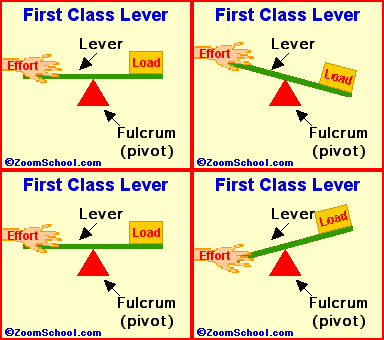 A Type 1 Lever. |
| Item | Number of Class 1 Levers Used | |
|---|---|---|
| see-saw |  | a single class 1 lever |
| hammer's claws |  | a single class 1 lever |
| scissors |  | 2 class 1 levers |
| pliers |  | 2 class 1 levers |
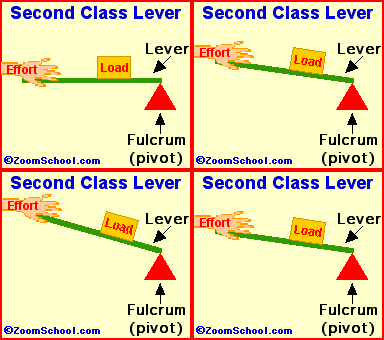 A Type 2 Lever. |
| Item | Number of Class 2 Levers Used | |
|---|---|---|
| stapler |  | a single class 2 lever |
| bottle opener | a single class 2 lever | |
| wheelbarrow |  | a single class 2 lever |
| nail clippers | Two class 2 levers | |
| nut cracker | Two class 2 levers | |
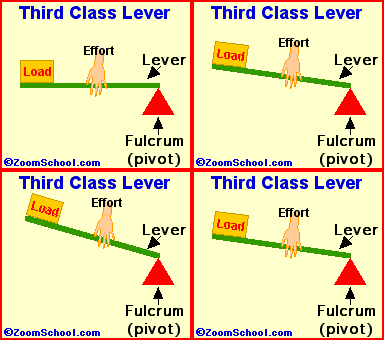 A Type 3 Lever. |
| Item | Number of Class 3 Levers Used | |
|---|---|---|
| fishing rod |  | a single class 3 lever |
| tweezers | Two class 3 levers | |
| tongs | 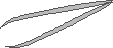 | Two class 3 levers |

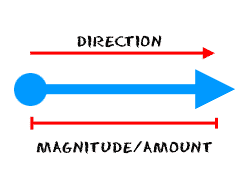 Force is one of many things that are vectors.
 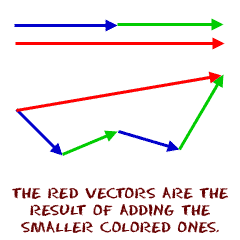 Imagine a situation where you're in a boat or a plane, and you need to plot a course. There aren't streets or signs along the way. You will need to plan your navigation on a map. You know where you're starting and where you want to be. The problem is how to get there. Now it's time to use a couple of vectors.
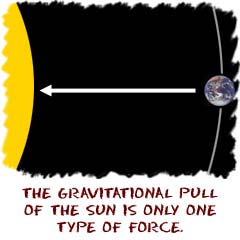 Forces are a big part of physics. Physicists devote a lot of time to the study of forces that are found everywhere in the universe.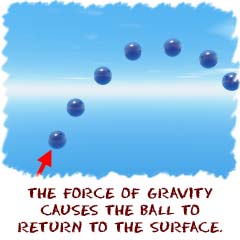
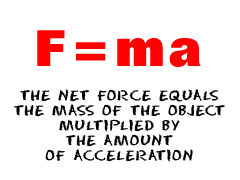 There is one totally important formula when it comes to forces, F = ma. That's all there is, but everything revolves around that formula.
| Force (newtons) | = Mass (kilograms) × Acceleration (meter per second-squared) |
| F | = m × m/s2 |
| F | = m × a |
| F | = ma |
| Answer: | F | = ma |
| = m × a | ||
| = 100 × 5 | ||
| = 500 N (newtons) |

| Examples of Levers | ||
 The tab is a lever used to The tab is a lever used toopen the can. |  The screwdriver is being The screwdriver is beingused as a lever. |  The handle on the pump is The handle on the pump isa lever. |
 The can opener is a lever. The can opener is a lever. |  The bottle opener is a lever. The bottle opener is a lever. |  The shovel is a lever. The shovel is a lever. |

| Examples of Wheel and Axles | ||
 Skates use wheel and axles. |  We use a wheel and axle to reel in the fishing line. |  Wheelchairs use wheel and axles. |
 The knob part is the wheel. The axle connects the two knobs. |  The steering wheel is a wheel and the axle goes into the steering column. |  Skateboards use wheel and axles. |

| Examples of Inclined Planes | |||
 An inclined plane lifts the front of this car. |  A long inclined plane equals the four steps. The ramp goes up, turns and continues. |  A short ramp is needed to equal these two steps. | |
 Inclined planes make our work easier. |  An inclined plane is used to lift this heavy wheelbarrow into this trailer. | ||
Wedge
|
A wedge is made by putting two inclined planes together. They come together to form a V-shape. A wedge may be used to lift or pry apart heavy objects. A wedge can also be used to stop an object from moving. A wedge has only one part.
The force and the load move in different directions. In this picture, as the force moves the ax down, the load (wood) breaks apart and falls to the sides.
|
.jpg)
| Examples of Wedges | ||
 The blade of a knife is a wedge. |  Each blade of the scissors is a wedge. |  The sharp edge of an ax is a wedge. |
The sharp edge of the shovel is a wedge. |  A door stop is a wedge that stops the door from moving. |  A wedge called a chock stops the car from moving. |

| Examples of Pulleys | ||
 Pulleys are used to open and close curtains and blinds. |  A pulley is used to make this ladder longer. |  A pulley is a grooved wheel with a rope around it. |
 Pulleys are used for exercise, especially in hospitals, to help patients grow stronger. |  Pulleys are used to raise and lower sails on sailboats. |  Pulleys are used to raise and lower flags. |


